
.svg)
.png)


.png)


.svg)


.svg)
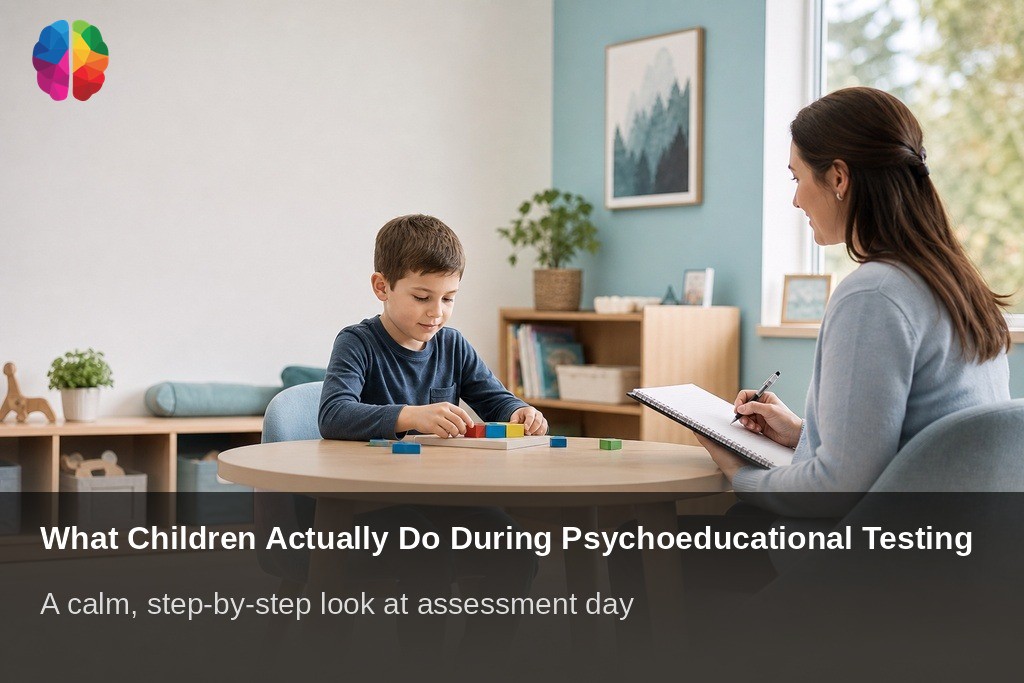
When a family is navigating school placement decisions or seeking accommodations for a child who learns differently, the question that comes up again and again is a simple one: what actually happens during psychoeducational testing? Many parents picture a formal, high-pressure exam room. Many children picture something even more daunting. The reality is quite different. The psychoeducational assessment process is designed to be child-centred, carefully paced, and focused on understanding how your child learns, not on judging whether they pass or fail. Knowing what to expect before you arrive can make an enormous difference in how your child approaches the day.
At All Brains Clinic in Vancouver, British Columbia, assessments are carried out by a multidisciplinary team that includes psychologists and specialists who work collaboratively on each case. That means the picture you receive at the end reflects input from multiple trained perspectives rather than a single clinician's impression. This article walks you through exactly what children experience during a psychoeducational assessment, what parents are involved in along the way, and what to look for when choosing a clinic that will produce results your child's school will recognise.
Why Families Feel Nervous Before Testing Day
It is completely natural for both parents and children to feel anxious before a learning assessment. Children often worry they will not know the right answers or that something is wrong with them. Parents carry their own concerns: fear that results will be upsetting, unfamiliarity with the clinical setting, and uncertainty about how the day will unfold.
What helps most is reframing what the assessment actually is. It is not a test your child can fail. There are no right or wrong answers in the way a school exam has them. The goal is to understand how your child thinks, processes information, and approaches different kinds of problems. As Waystone notes in their published guidance, every psychoeducational assessment is unique, and the tests, activities, and recommendations are adapted to the individual's age, background, learning history, and current concerns. That adaptability is what keeps the experience from feeling rigid or intimidating.
The Stages of a Psychoeducational Assessment
A full psychoeducational assessment covers a broad range of domains. According to research published on PubMed Central, psychoeducational assessments integrate theoretical frameworks with practical evaluation tools to identify cognitive and academic profiles. In practice, this means looking at how a child thinks, remembers, processes language, manages attention, and performs on academic tasks. The scope is intentionally wide because learning difficulties rarely exist in just one area.
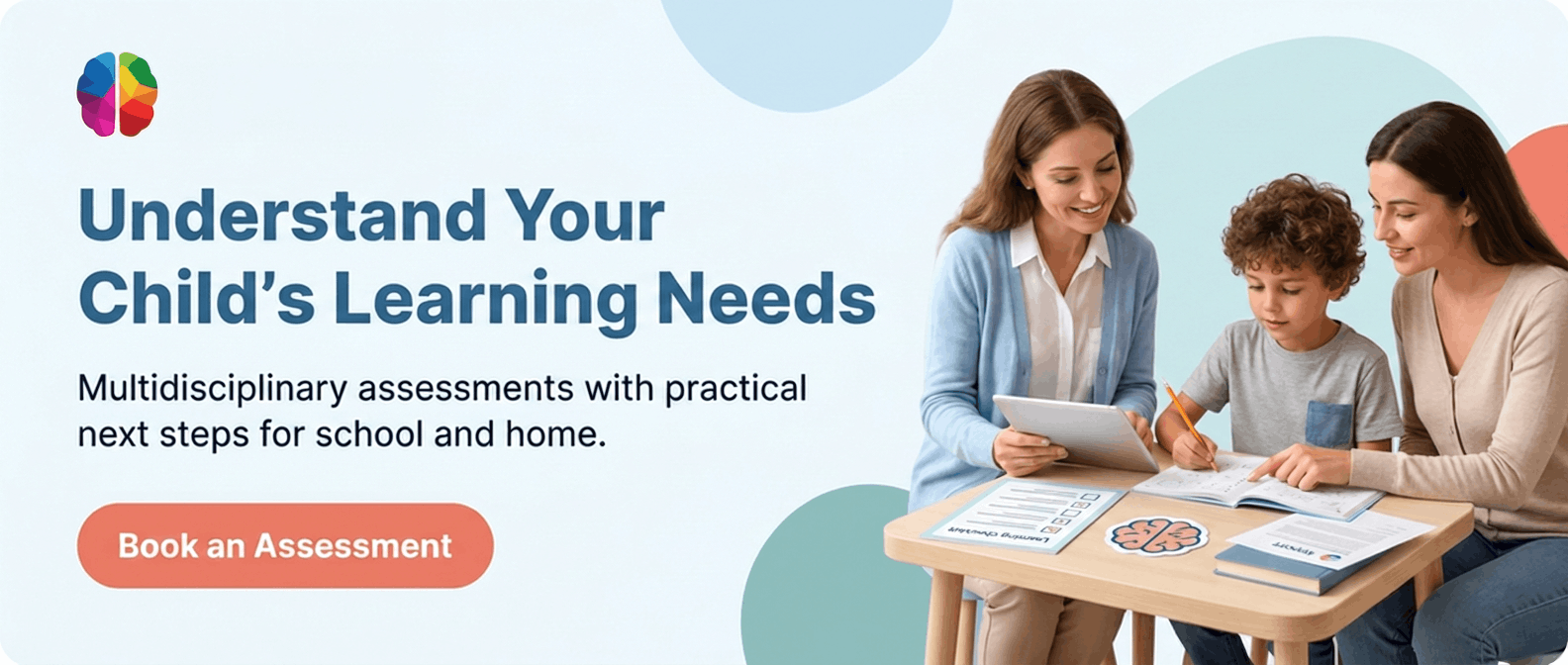
Assessments are typically spread across more than one session to prevent fatigue from affecting the results. Most evaluations involve several hours of direct contact with the child, divided across appointments so that your child is always working at their best. The overall arc moves from low-pressure warm-up activities through to structured tasks, with breaks built in throughout.
Stage 1: Building Rapport
The first few minutes of any assessment session are not spent on formal tasks. The clinician's priority is helping your child feel comfortable in an unfamiliar space. This usually involves easy conversation about things your child enjoys, a brief tour of the room, and sometimes a simple, playful activity that requires no performance. Children who feel at ease with the person evaluating them tend to perform more accurately, which is why this rapport-building stage matters to the quality of the results. At All Brains Clinic, it is built into the structure of every session.
Stage 2: Structured Assessment Tasks
Once your child feels settled, the structured portion of the session begins. The tasks are varied by design. Some look and feel like puzzles: a child arranges blocks or completes a visual pattern. Others involve listening to a list of words or numbers and repeating them back, which gives the evaluator a window into working memory. Drawing tasks, storytelling prompts, reading short passages aloud, and answering verbal questions are all part of the mix.
Common instruments used across British Columbia assessments include tools such as the WISC intelligence battery and the Woodcock-Johnson Achievement Test, alongside behavioural rating scales completed separately by parents and teachers. From a child's point of view, many of these activities feel more like interactive games than anything resembling a school test, especially for younger children.
Stage 3: The Parent Interview
While the child works with the evaluator, parents typically participate in a structured conversation of their own. The psychoeducational assessment intake interview that happens at the beginning of this process is a formal but collaborative part of the assessment where clinicians gather information about your child's developmental history, early milestones, school behaviour, social patterns, and daily routines. This is not an interrogation, and it is not a measure of your parenting. Your observations are treated as essential clinical data, because no one knows your child's patterns across settings better than you do.
You may be asked about pregnancy and birth history, early speech and language development, how your child handles transitions, what frustrates them academically, and how they behave in structured versus unstructured settings. Bringing notes or a short written summary of your observations can make this conversation richer and more efficient. The information you share directly shapes the completeness of the learning profile that emerges from testing.
Stage 4: The Feedback Session
Once all testing is complete and the clinical team has reviewed and interpreted the results, families come back for a dedicated conversation about what was found. Results are explained to parents in plain language, which matters more than it might seem. Research published in the Journal of Psychologists and Counsellors in Schools found that both teachers and psychologists identified clear writing, accessibility, and actionable recommendations as the most critical factors in an effective psychoeducational report.
The written report you receive from All Brains Clinic is designed to serve a practical purpose: it needs to open doors. Whether you are requesting accommodations at your child's current school, applying to an independent school with specific intake criteria, or pursuing support through a BC school district, the recommendations in the report connect directly to those processes. The feedback session after psychoeducational assessment at All Brains Clinic is followed by complimentary post-assessment support sessions, giving families a structured opportunity to return with follow-up questions once they have had time to read the report carefully and think through next steps. This reflects the clinic's view that the assessment is not an endpoint but a starting point for meaningful change.

How Standardised Tools Shape the Learning Profile
One of the most important functions of a psychoeducational assessment is producing results that schools and admissions teams will accept. Standardised tests compare your child's performance against age-matched norms, based on how your child performs relative to peers at the same developmental stage rather than on a clinician's subjective impression. As Hamilton Psychological Services explains, a psychoeducational assessment uses a variety of tools to develop a complete picture of an individual's academic skills, cognitive abilities, and social-emotional functioning, allowing clinicians to understand how someone learns and approaches problems.
According to Hamilton Psychological Services, testing typically covers between six and ten hours across multiple domains including language, visual abilities, attention, memory, and executive processing. At All Brains Clinic, the recognised assessment tools used are specifically chosen to produce the kind of documented learning profile that BC school districts and independent schools in British Columbia accept for placement decisions and accommodation requests. A report built on unrecognised tools can delay or complicate school processes significantly, and this is not a detail to overlook when comparing clinics.
What Children Experience Between Tasks
A full assessment involves more than structured tasks. Children move through moments of genuine frustration when something feels hard, stretches of confidence when an activity plays to their strengths, and periods of real fatigue as concentration is sustained across sessions. You can prepare your child honestly by telling them ahead of time that some activities will feel easy, some will feel tricky, and all of that is completely expected. Reassure them that the evaluator is not looking for perfection; they are looking for a clear picture of how your child's mind works at its natural best.
Clinicians who work with children during assessments are trained to notice when a child is hitting a wall and to respond with patience, encouragement, and well-timed breaks. The goal is always to protect the accuracy of the results by keeping the child as regulated and comfortable as possible throughout.

What to Confirm Before Booking a Learning Assessment in BC
Choosing the right clinic involves asking some practical questions before you commit. If you are working toward a specific admissions deadline, whether for a Greater Vancouver independent school or a specialised programme within your local school district, that timeline should shape every part of the process, from booking to report delivery. Families with upcoming application dates are encouraged to flag those deadlines clearly when they first contact a clinic.
Practical questions worth asking any clinic include:
- Which specific standardised tools are used, and are they recognised by BC school districts and independent schools?
- How long does it typically take to receive the written report after testing is complete?
- Does the assessment include a parent interview and a formal feedback session?
- What follow-up support is available after the report is delivered?
All Brains Clinic welcomes these questions and encourages families to bring their admissions context to the very first conversation. The clinic's multidisciplinary team is structured to move efficiently without cutting corners, and complimentary post-assessment support means you are not left navigating the report on your own once it arrives.
If your family is ready to take the next step, reaching out to All Brains Clinic in Vancouver is a straightforward way to get a clear sense of what the process will look like for your child specifically.
Frequently Asked Questions About Psychoeducational Testing
What does a child actually do during psychoeducational testing?
A child completes a series of structured tasks alongside a trained evaluator, including block puzzles, memory exercises, reading passages aloud, and answering verbal questions. The activities are designed to feel more like interactive games than a school exam, especially for younger children, and breaks are built in throughout each session.
How long does psychoeducational testing take in BC?
Testing typically involves six to ten hours of direct assessment time, spread across multiple sessions to prevent fatigue from affecting accuracy. The number of sessions depends on the child's age, the domains being assessed, and the specific questions the family or school has raised.
Can a child fail a psychoeducational assessment?
No. A psychoeducational assessment is not a pass-or-fail test. It measures how a child thinks, remembers, and processes information relative to age-matched peers, with the goal of building an accurate learning profile rather than judging whether a child meets a particular standard.
What is the parent interview during psychoeducational testing?
The parent interview is a structured conversation where clinicians gather your child's developmental history, school behaviour, and daily patterns. Your observations are treated as clinical data. Bringing brief written notes about your child's milestones, frustrations, and strengths can help make this conversation more thorough.
Will the psychoeducational report be accepted by BC schools?
Reports based on recognised standardised tools such as the WISC intelligence battery and the Woodcock-Johnson Achievement Test are generally accepted by BC school districts and independent schools for accommodation requests and placement decisions. Confirm with any clinic that the tools they use meet this standard before booking.
What happens at the feedback session after psychoeducational testing?
The clinical team explains the assessment results in plain language and walks through the written report's recommendations. At All Brains Clinic, complimentary follow-up sessions are also available so families can return with questions after reading the report on their own.


