
.svg)
.png)


.png)


.svg)


.svg)
When a child is struggling in school or showing signs of a learning difference, the path forward often begins with a comprehensive evaluation. For families in Vancouver and across the Lower Mainland, cost can feel like an immediate barrier, but there are more ways to get financial help than most people realise. This guide walks you through the key funding options clearly, so you can focus on what matters most: getting your child the answers and support they need.
Research consistently shows that targeted financial support makes a real difference. According to a case study published by Taylor and Francis in Studies in Higher Education, needs-based financial assistance tends to have a strong positive effect on educational outcomes for students from lower-income households. Securing funding for a learning assessment is not just a financial exercise. It is an equity issue that shapes a child's future.
Why Learning Assessments Cost What They Do
A comprehensive evaluation is not a single appointment. It typically involves several hours of standardised testing, clinical interviews with the child and caregivers, score interpretation, and a detailed written report with recommendations. When a multidisciplinary team is involved, as at All Brains Clinic, each specialist contributes their area of expertise to build a complete picture of the child's strengths and needs.
Standardised assessment tools carry licensing costs, and the professionals who administer them hold advanced degrees requiring years of training. The resulting report is a clinical document that schools, districts, and post-secondary institutions rely on to grant accommodations and guide placement decisions. Most school budgets prioritise direct instruction, leaving limited resources for individual diagnostic evaluations. This is why Vancouver families often bear these costs themselves. Understanding what goes into the process helps put the investment in context, even before any funding is applied.
Main Funding Options for Learning Assessments in BC
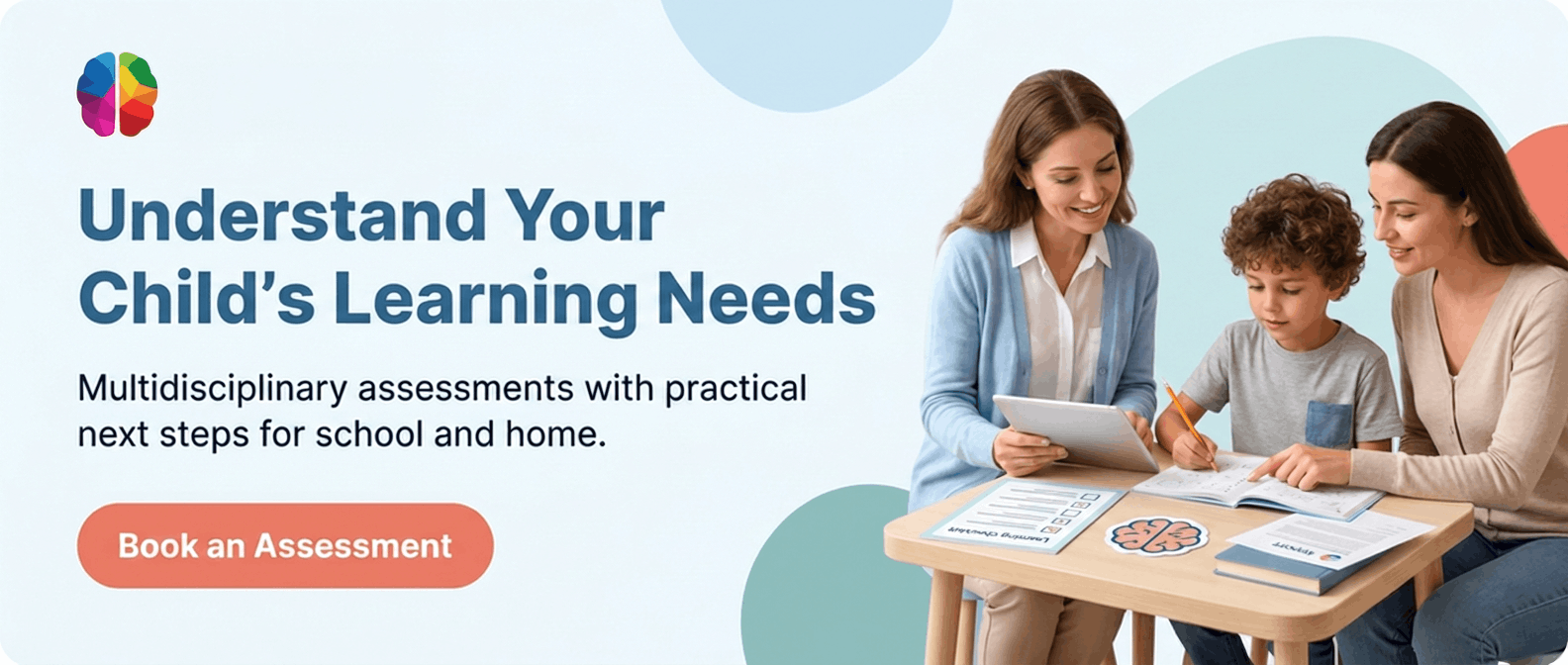
In British Columbia, families have access to several funding pathways. The right one depends on your child's age, their specific needs, and how urgently a formal diagnosis is required for school placement.
School Board Referrals
If your child is enrolled in a Vancouver or Lower Mainland school and showing documented signs of a learning difficulty, you can request a school-initiated referral for assessment. School boards employ psychologists who conduct psychoeducational evaluations for students who meet specific criteria, typically those with observed academic struggles, suspected learning disabilities, or known developmental concerns. The Vancouver School Board and surrounding districts such as Surrey, Burnaby, and Richmond all have referral processes in place, though procedures and timelines vary by district.
Key advantage: No direct cost to families. The district covers the assessment.
Key limitation: Wait times can extend to one or two school years in many Metro Vancouver districts. For families working against admissions deadlines or trying to secure accommodations for an upcoming school year, this timeline may not be workable.
MSP and Provincially Covered Components
BC's Medical Services Plan (MSP) covers psychiatric consultations conducted by licensed psychiatrists. This means the psychiatric component of a comprehensive assessment, including a full clinical interview and psychiatric evaluation, may be covered under provincial health insurance for BC residents.
All Brains Clinic builds this MSP-covered psychiatric evaluation directly into every assessment, which meaningfully reduces the out-of-pocket cost for Vancouver families. Psychological testing, speech-language assessment, and the written report are not covered by MSP. These components remain the family's financial responsibility unless supplemented through other funding channels.
BC Grants for Learning Disability Evaluations
A growing number of grant programs and disability-specific funds offer financial help for educational testing across British Columbia and Canada more broadly.
Variety BC offers dedicated funding for private autism and psychoeducational assessments, specifically to help families access evaluations that schools recognise for placement and accommodation purposes. Funding windows open on a scheduled basis. Check directly with Variety BC for current availability.
The BC Learning Disability Assessment Bursary (LDAB) is a needs-based program that helps cover psychoeducational assessment costs, primarily for students pursuing post-secondary education. It serves as a useful model of how formal assessment funding is structured provincially.
Diagnosis-specific programs tied to autism or ADHD diagnoses may also be available for school-age children in BC. Foundation-based funding in this area has been expanding in recent years, with philanthropic investment from various organisations increasingly directed toward assessment tools and access. Eligibility requirements and application windows vary by program and change annually, so contacting organisations directly and early is strongly advised.

Community Funding for Assessments in Vancouver
Community-level resources are often overlooked but can be genuinely impactful. In Vancouver and the surrounding region, organisations such as the Developmental Disabilities Association, the Pacific Autism Family Network, and local nonprofit family service agencies sometimes hold dedicated funds to support families who cannot cover the full cost of an evaluation. Even partial support can make a private assessment accessible.
Useful starting points include 211 BC, a free helpline connecting Vancouver families to social services and community resources by neighbourhood and region; parent advocacy groups focused on autism, ADHD, and learning disabilities, which maintain updated lists of local funding opportunities; and Vancouver School Board community liaison workers and child and youth mental health offices at Vancouver Coastal Health or Fraser Health, depending on your area.
Employer Benefits and Extended Health Plans
Many Vancouver families do not realise that their extended health benefits or employee assistance programs may cover part of the cost. Insurance coverage for psychoeducational assessments varies between plans. Some cover registered psychologist services up to an annual dollar limit, while others include speech-language pathology or occupational therapy services that may form part of a broader evaluation.
Before booking, ask your benefits provider the following:
Clinics like All Brains Clinic provide detailed invoices and professional documentation that insurance providers require to process reimbursement claims, so this should not create extra administrative work for families.

Ways to Reduce Assessment Costs Without Compromising Quality
When external funding does not fully close the gap, there are practical approaches worth considering. Some clinics offer phased assessments, spreading testing across a longer timeframe to distribute payments. University-affiliated training clinics, such as those run through UBC and Simon Fraser University, conduct assessments under qualified oversight, sometimes at a reduced rate, while still using standardised and recognised tools.
Not all cost-reduction approaches are equal. Research published by the MIT Press Education Finance and Policy journal found evidence of a link between targeted additional funding and measurable improvements in student outcomes. A lower-cost report that is not accepted by a Vancouver school district, or that lacks the clinical depth needed to support accommodation requests, may ultimately cost more through missed support and repeat testing. Always confirm that the assessor holds credentials recognised in BC and that the report format will be accepted by the school or institution you are targeting.
What to Check Before Booking an Assessment
Before committing to a clinic or assessor, confirm the following:
At All Brains Clinic, every assessment is followed by complimentary post-assessment support sessions, giving families the space to ask questions and move forward with clarity and confidence. If your family is ready to take the next step toward a comprehensive assessment in Vancouver, our multidisciplinary team is here to guide you from your first question to your child's personalised plan.
Frequently Asked Questions About Funding Learning Assessments in Vancouver
Does MSP cover the full cost of a learning assessment in BC?
No. MSP only covers the psychiatric consultation portion of a comprehensive assessment, when conducted by a licensed psychiatrist. Psychological testing, speech-language assessment, and the written report are not MSP-covered. Families will need to explore additional sources such as grants, employer benefits, or community funds to cover the remaining costs.
How long is the wait for a school board assessment in Vancouver?
Wait times for school-initiated psychoeducational assessments in Metro Vancouver districts can range from several months to one or two school years, depending on the district and demand. Families with urgent timelines, such as approaching admissions deadlines or upcoming accommodation reviews, often choose private assessments to avoid delays.
Can employer extended health benefits pay for a child's learning assessment?
Yes, in many cases. Extended health plans that include registered psychologist services may reimburse part of the assessment cost, up to the plan's annual maximum. Coverage varies by employer and insurer, so contact your benefits provider before booking to confirm what is included and whether a referral is required.
What is Variety BC and how does it help with assessment costs?
Variety BC is a nonprofit organisation offering dedicated funding to help BC families access private autism and psychoeducational assessments. Funding is available in scheduled windows and supports evaluations that schools accept for placement and accommodation purposes. Check the Variety BC website directly for current application dates and eligibility criteria.
Are university training clinic assessments accepted by Vancouver schools?
In many cases, yes. Assessments at university-affiliated training clinics, such as those at UBC or Simon Fraser University, use standardised tools under qualified supervision and can produce reports recognised by school districts. Confirm with your school district that the specific clinic and report format meet local requirements before proceeding.
What credentials should a learning assessment provider hold in BC?
Psychologists conducting educational assessments in BC must be registered with the College of Psychologists of British Columbia. Psychiatrists must be licensed through the BC College of Physicians and Surgeons. Confirming registration with the relevant professional college helps ensure the report will be accepted by schools, insurers, and post-secondary institutions.
Dr. Ali Eslami, Chief Editor
Dr. Ali Eslami is a child psychiatrist at BC Children’s Hospital and All Brains Clinic with a PhD from Brown University. With expertise in neurodevelopmental disorders, autism assessment, and AI research in mental health, he ensures every article meets the highest standards. His sharp editorial eye guarantees clarity, accuracy, and credibility in all our content.


