
.svg)
.png)
.svg)

Choosing where to have your child assessed is one of the most consequential decisions a family can make during the school years. The results of a psychoeducational or diagnostic evaluation can shape your child's access to learning supports, classroom accommodations, and appropriate placement for years to come. When families in Vancouver begin exploring their options, they are often navigating an unfamiliar landscape with little guidance on what separates a high-quality provider from one that may leave them with an unusable report and a missed school deadline. Knowing the key warning signs early in the process can protect your family from wasted time, added expense, and real harm to your child's educational path.
This article walks you through the most important warning signs to look for, the questions worth asking before you commit, and the standards a trustworthy clinic should meet without hesitation. Whether you are exploring options for the first time or reconsidering a provider you have already contacted, the information here is intended to help you move forward with confidence.
Why Choosing the Right Assessment Provider Matters
A poorly conducted assessment does not simply produce a disappointing report. It can result in a school rejecting the findings entirely, leaving your child without the accommodations they need. It can lead to a missed or incorrect diagnosis that shapes how teachers, specialists, and even your child view their own abilities. For families working within the tight timelines of school admissions or accommodation requests in British Columbia, a report that does not meet institutional standards can mean waiting another full year before the process can begin again.
The emotional cost to families is significant as well. Parents who have invested time, money, and hope into an assessment process deserve results they can act on. When a report comes back vague, incomplete, or unacceptable to a school placement committee, the frustration can be profound. Understanding what provider warning signs look like before you book gives you the ability to ask the right questions early, filter out providers who are not equipped to serve your child properly, and move forward with a clinic whose process you can trust.

Key Red Flags When Choosing an Assessment Provider
Not every provider who offers child assessments operates at the same standard. Some warning signs are subtle and easy to overlook during an initial inquiry, while others are clear signals that the process will fall short of what schools and families require.
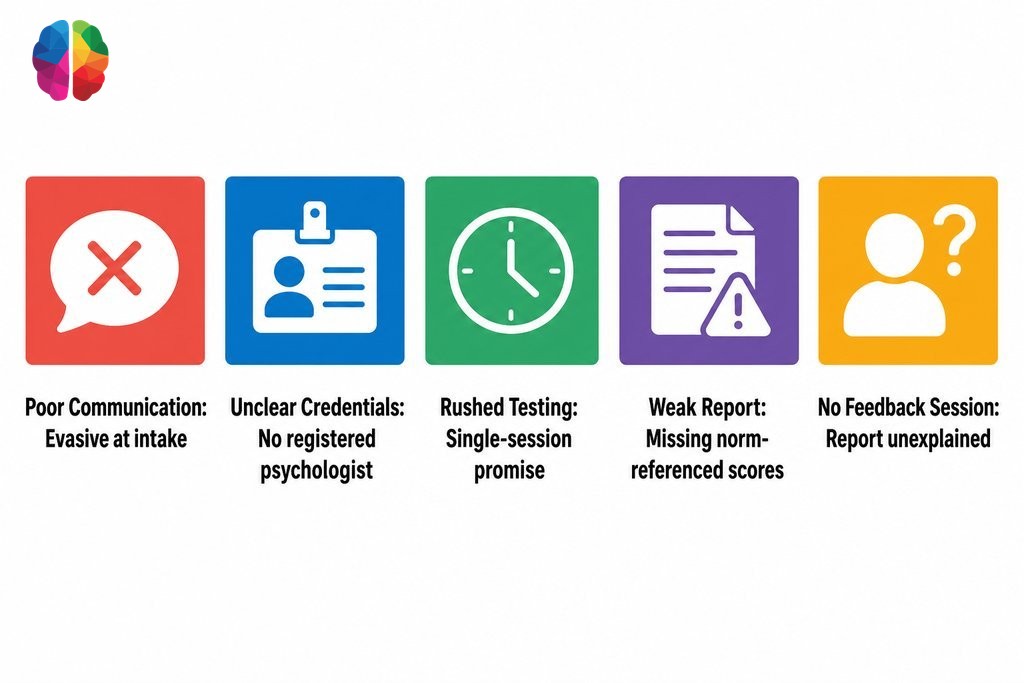
Poor Communication at the Intake Stage
If a clinic takes days to respond to basic questions, provides only scripted or evasive answers, or cannot clearly explain what the assessment process involves, that pattern tends to reflect how the entire experience will unfold. Transparency about methodology and potential conflicts of interest is a universally recognized quality standard. A clinic that values your family will engage with you clearly and promptly from the very first contact.
No Clear Information About Who Will Assess Your Child
One of the most important questions to ask is exactly who will conduct the testing and in what capacity. In British Columbia, psychoeducational and diagnostic assessments used for school placement or accommodation requests must be conducted by, or under the direct supervision of, a registered psychologist. If a clinic cannot confirm the credentials of the person administering the tests, or deflects when asked whether a registered professional will be involved, that is a serious concern.
Some providers use technicians or junior staff to administer standardized tests without making this clear to families. While supervised testing is sometimes appropriate, the level of oversight matters, and families have every right to know the exact professional status of the person working with their child.
An Unclear or Rushed Testing Process
Legitimate child assessments require time. A comprehensive psychoeducational evaluation typically spans multiple sessions and covers several developmental or cognitive domains depending on the referral question. Watch for providers who promise an unusually fast turnaround, compress a multi-session process into a single appointment, or cannot describe which standardized tools will be used and why.
As research published by PMC / BioMed Central confirms, selecting the wrong assessment tool for a given situation can produce contradictory conclusions, and the evaluator's expertise and methodology transparency are non-negotiable quality markers. The assessment process should be explained to you clearly before you book, including what the sessions will involve, how long the process will take, and what the final report will address.
What a High-Quality Assessment Report Should Include
Once the assessment is complete, the report is the document your family will rely on when speaking with teachers, school administrators, and specialist teams. A strong report should include standardized test scores with norm-referenced data, clinical observations gathered across multiple sessions, a clear diagnostic summary where applicable, and practical recommendations written in language that educators and placement committees can act on.
Report quality red flags include generic findings that could apply to almost any child, missing score breakdowns, conclusions not supported by the data presented, and vague language that leaves schools uncertain about what supports are actually needed.
The National Heart, Lung, and Blood Institute notes that methodology choices directly affect the validity of any assessment report, and that incomplete or selective analysis can introduce meaningful bias into the conclusions drawn. In a child assessment context, a provider who reports only findings that paint a particular picture while omitting areas of difficulty or inconsistency is not giving your family or your child's school an accurate or complete profile. Families should expect every relevant domain to be addressed, with results explained in plain language during a dedicated feedback session.

Questions to Ask Before Booking a Vancouver Child Assessment
Approaching a potential provider with direct questions is not only appropriate, it is essential. The intake conversation is a two-way evaluation, and a confident, ethical clinic will welcome your questions rather than redirect or minimize them. These questions before booking a psychoeducational assessment can help you determine whether a provider meets the standard your child deserves.
Practical questions to bring to any provider:
- Who will conduct the testing, and what are their professional credentials and registration status?
- Which standardized assessment tools will be used, and are they appropriate for my child's age and referral question?
- How many sessions does the full assessment involve, and what is the realistic timeline from intake to report delivery?
- Will the report include norm-referenced scores and specific recommendations that schools can act on?
- What post-assessment support is available once the report has been delivered?
If a provider becomes evasive or dismissive when you raise these questions, treat that as meaningful information. A clinic that cannot answer basic process questions with clarity and confidence is unlikely to deliver a report that serves your child well. You may also want to clarify whether a doctor referral for psychoeducational assessment is required or recommended before booking, as this can affect both the intake process and any publicly funded components of the evaluation.

How a Multidisciplinary Approach Reduces Assessment Risk
One of the most effective safeguards against assessment error is having more than one qualified clinician contribute to the evaluation. When a single practitioner is responsible for every aspect of a complex assessment, there is inherently greater risk of missed findings, tool selection errors, or interpretive bias. A multidisciplinary team that includes psychiatrists, psychologists, and specialists such as speech-language pathologists brings multiple perspectives to a child's profile, increasing the likelihood that nothing significant is overlooked.
At All Brains Clinic in Vancouver, every case is approached through a collaborative team model. This includes independent dual autism assessments designed to reduce bias in diagnostic conclusions. For younger children under six years of age, the evaluation covers five developmental domains, including emotional, social, cognitive, language, and motor development, providing a comprehensive picture that single-clinician assessments are rarely positioned to deliver. Each assessment also includes a full psychiatric evaluation covered under BC's Medical Services Plan, followed by complimentary post-assessment support sessions to help families understand the results and move forward with a clear plan.
When to Pause and Reconsider Your Provider Choice
There are moments during an assessment journey when stepping back and asking more questions is the right decision. If a completed report is handed to you without any explanation or feedback session, that is a serious concern. Reports should be walked through with a qualified clinician who can explain the findings, answer your questions, and help you understand what the recommendations mean for your child's schooling and daily life.
Families should also pay attention when results seem inconsistent with the behaviour they observe at home or that teachers describe at school. While assessments can and do reveal things that are not immediately visible in everyday settings, significant discrepancies between observed behaviour and reported findings are worth exploring with a second opinion.
Similarly, if a provider actively discourages your questions, rushes the feedback conversation, or suggests the report is self-explanatory, those are patterns that do not reflect the standard of care your family deserves. Every family has the right to understand every part of the assessment process, and a high-quality provider will not just tolerate that involvement; they will genuinely welcome it.
If you are searching for a child assessment provider in Vancouver, whether you are based in Kitsilano, Burnaby, North Vancouver, or elsewhere in the Lower Mainland, and want to speak with a team that takes every one of these considerations seriously, All Brains Clinic is here to help. Reach out to begin a conversation about your child's needs and discover how a transparent, collaborative assessment process can make a meaningful difference for your family.
Frequently Asked Questions
What credentials should a child assessment provider have in British Columbia?
In BC, psychoeducational and diagnostic assessments used for school accommodations must be conducted by, or under the direct supervision of, a registered psychologist. Before booking, ask the clinic to confirm the professional registration status of the person who will administer and interpret the tests. A reputable provider will answer this question without hesitation.
Can a school reject an assessment report?
Yes. Schools and placement committees can decline to act on reports that do not meet professional or institutional standards. Common reasons include missing norm-referenced scores, an unclear diagnostic summary, or assessments prepared by an unqualified provider. A rejected report can delay accommodations by a full school year, which is why provider quality matters from the outset.
How many sessions should a thorough child assessment involve?
A comprehensive psychoeducational evaluation typically spans multiple sessions rather than a single appointment. The exact number depends on the referral question and the child's age. Any provider promising to complete a full assessment in one short visit should be viewed with caution. Ask the clinic to outline the session structure before you commit.
What should a child assessment report include to be accepted by schools?
A report accepted by schools should include standardized test scores with norm-referenced data, clinical observations, a clear diagnostic summary where applicable, and actionable recommendations written in language educators can apply. Vague conclusions, missing score breakdowns, or findings unsupported by the data presented are common reasons schools find reports insufficient.
Is a doctor's referral required before booking a psychoeducational assessment in Vancouver?
A referral is not always required to book a private psychoeducational assessment, but it may be recommended depending on the clinic and whether any publicly funded components are involved. Clarify this directly with your provider during the initial inquiry, as the answer can affect both the intake process and your overall timeline.
What is a multidisciplinary assessment and why does it matter?
A multidisciplinary assessment involves more than one qualified clinician, such as a psychologist, psychiatrist, or speech-language pathologist, contributing to the evaluation. This collaborative approach reduces the risk of missed findings or interpretive bias that can occur when a single practitioner handles every aspect of a complex assessment. It is especially valuable for children with multiple or overlapping areas of concern.


.png)


